

Dubai dress code


Have you ever worried about what to wear in a foreign country? If you plan to travel, or even purchase property in Dubai and reside in this global city, this question has likely crossed your mind. Although the UAE is a Muslim country, Dubai, due to its liberal and international approach, has established dress code laws in Dubai that are much more flexible than other Emirates.
Studying this article will help you fully understand the cultural norms and dress codes in Dubai, preventing any misunderstandings or legal issues, and allowing you to focus on enjoying your trip or the process of buying an apartment in Dubai. This guide provides all the key points concisely and effectively.
Dress Code Laws in Dubai in Public Places
In Dubai, a certain degree of modest dress is expected in all public places such as shopping malls, cinemas, restaurants, and public transportation. There are general guidelines for the dress code in Dubai, and signs often remind visitors of these rules at the entrances of malls and hotels:
- Covering Shoulders and Knees: For both women and men, it is formally expected to cover the shoulders and knees in public places. Wearing spaghetti-strap tops or short shorts may attract unwanted attention.
- Avoiding Revealing and Short Clothing: Tight, body-hugging, short, or transparent (see-through) clothing that exposes private body parts is not permitted in public places and should be avoided.
- Avoiding Clothing with Offensive Slogans or Symbols: It is strictly prohibited to wear clothes with offensive, racist, or blasphemous slogans or symbols.
- Wearing Comfortable, Loose-Fitting Clothes Made of Natural Fibers for the Heat: Due to Dubai’s warm climate, it is recommended to wear loose, light, and comfortable clothing made from natural fibers like linen or cotton. These materials are more breathable in the heat. Long-sleeved and loose clothes can also protect you from intense sun and the strong air conditioning indoors.
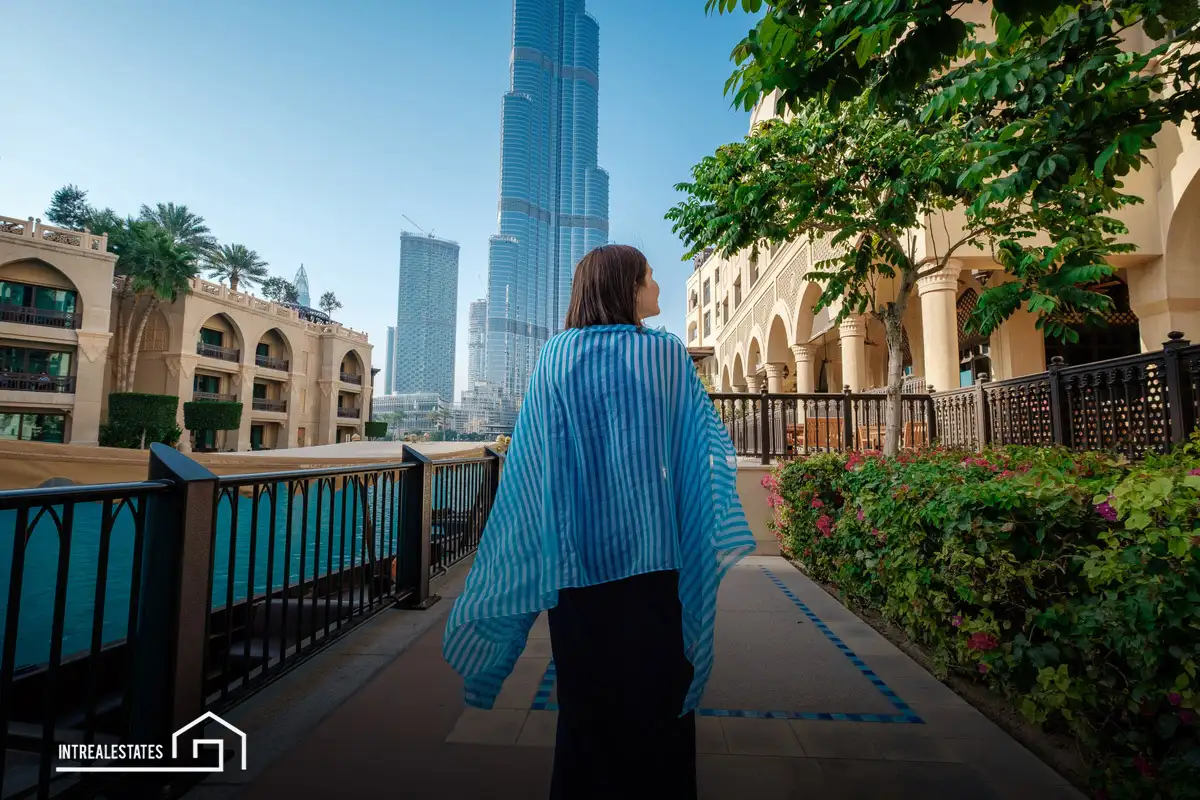
Is the Hijab Mandatory in Dubai?
The answer to this question is no; the hijab (full head covering) is not mandatory for tourists in Dubai, and female tourists are not required to wear an abaya, niqab, or burqa. However, the hijab is regarded as a cultural and religious expectation in Dubai for modesty and respect in public places.
It is necessary to note that in specific places, such as mosques and religious sites, covering the hair (usually with a scarf or shawl) and wearing loose, long clothing is mandatory for women.
What Are the Consequences of Violating the Dubai Dress Code?
If your chosen attire does not comply with Dubai’s general dress code, you should expect to be denied entry at the entrance of a shopping mall or public building. In such cases, carrying a large shirt or scarf to cover up will solve the problem. If you plan to buy a villa in Dubai and reside permanently in the city, awareness of these rules becomes particularly important.
Generally, Dubai’s dress code laws are not strictly enforced, and police often overlook minor infractions unless a local individual complains. However, defiance of laws related to public decency or inappropriate dress may lead to legal consequences such as a fine or arrest.
Dubai Dress Code Based on Location
The dress code in Dubai varies significantly depending on the location, and individuals must adjust their attire based on the environment:
- Religious Sites: Dress codes are the strictest here. Women must cover their hair with a scarf or shawl and wear long, loose, modest clothing that covers their arms and legs. Men must also wear long trousers and avoid sleeveless or short-sleeved shirts.
- Beaches and Pools: Swimwear and bikinis are permitted for women in beach and poolside areas. However, swimwear is only allowed on the beach or by the pool, and leaving these premises in swimwear is prohibited. Also, sunbathing nude or topless is not only offensive but illegal.
- Shopping Malls: Malls (like The Dubai Mall) are tourist spots, and the dress code is more relaxed, but the general rule of covering shoulders and knees should be followed. Women can wear tops, shorts down to the knee, and loose jeans, but clothes should not be overly tight, and wearing crop tops is not recommended.
- Traditional Markets (Souks): Traditional markets and souks are more local and conservative than modern malls. It is recommended to be as covered as possible and avoid wearing shorts, capris, skirts, or anything above the knee. If you are looking for property in Business Bay or the traditional areas of Dubai, adhering to the dress code in these markets shows respect to your future neighbors.
- Restaurants and Nightclubs: The atmosphere in restaurants and nightclubs is often slightly more relaxed. In restaurants, wearing t-shirts, tops with jeans, knee-length or long skirts, and loose maxi or summer dresses is acceptable. Nightclubs are less strict, but still, wearing swimsuits, bikinis, skirts or short shorts that expose the thighs, and clothes with excessively plunging necklines is not recommended.
- Public Transportation: The Metro, buses, trams, and taxis are considered public places, and general dress code rules must be observed, avoiding very short or overly revealing clothing.
- Desert Safari: For a desert safari, comfort and protection from the sun and sand are essential. Knee-length shorts or skirts are acceptable, but loose trousers and long-sleeved shirts made of cotton or linen are highly suitable for sun protection and vehicle air conditioning. In this environment, the luxury of property in Jumeirah is forgotten, and comfort and safety against the heat take priority.

🧍 Dress Code by Gender
The dress code in Dubai prioritizes modesty and respect for local culture for both genders:
- Men’s Dress: Dress code rules are relatively liberal for men, but shoulders and knees must be covered in public places. Wearing short shorts and low-cut shirts is prohibited. On beaches, men can remove their shirts, but walking shirtless outside the beach or public areas is inappropriate.
- Women’s Dress: Despite the freedom of choice in clothing, women must cover their shoulders and knees. They should avoid tight, revealing, transparent clothing, and clothes with deep necklines that expose the chest. If you are looking for a town house in Dubai, consider that in residential neighborhoods, the more formal attire of locals can influence your clothing choice.
- Children’s Dress: Children can generally wear regular clothes, and there are not many tourist restrictions for them. However, they should not be allowed to go completely naked in public environments, and children’s swimwear is only permitted in pools and on beaches.
Dubai Dress Code During Seasons and Special Events
Individuals planning to reside in the city must align their dress code with the weather and religious events:
- Dress in Summer: Dubai’s summer (April to October) is very hot. The priority is wearing cool, loose, cotton, and thin clothes. Cotton dresses, knee-length skirts and shorts, and half-sleeved t-shirts are suitable options.
- Dress in Winter: The winter months (November to March) have pleasant weather. Very warm clothes are not necessary. It’s best to wear long-sleeved and full-length clothes and carry a light jacket, sweatshirt, or cardigan for the evenings.
- Dress During Ramadan: During the holy month of Ramadan, visitors and residents are expected to dress more conservatively than usual. Avoid wearing sleeveless tops, shorts, and revealing clothes in public. For investors looking for a penthouse in Dubai, even in more private settings, respecting the customs of Ramadan in the public spaces of luxury residential buildings is recommended. Also, during Ramadan, adults are not allowed to eat, drink, or smoke in public during daylight hours.

Conclusion
Dubai is known for its modernity and hospitality and welcomes tourists with open arms. While you enjoy a high degree of freedom in this city, respecting local laws and cultural customs is very important. By observing these simple tips and wearing relatively modest clothes (covering shoulders and knees in public places), you can have a comfortable and worry-free trip to Dubai. Paying attention to the situational context when choosing your attire is the main key to avoiding any problems.
If you plan for a long-term stay and property purchase in Dubai, our company, intrealestates, offers various properties in key areas like Dubai Marina, Business Bay, and other popular districts. For more specialized information and to register your inquiry, please contact our experts. By adhering to the Dubai dress code, your stay in this golden city will be the best possible experience.